

A related photograph of the above is currently on show (and for sale) in Williamson Open exhibition. If you are interested in purchasing a framed photo of any of my liverwort photos, then let me know in comments section.
Relative Values:
What do we value? Do you think a piece of antique wedgwood jasperware is worth more than the magnificent, ancient snakeskin liverwort? You can’t eat your dinner off these wedgwood plates, but they are beautifully crafted and Our Lady is happy growing on top of them. I had the idea to grow some of the snakeskin liverwort on wedgwood plates after visiting the Lady Lever Art Gallery in Port Sunlight, Wirral, near Liverpool, UK. This gallery houses the finest collection of Wedgwood jasperware in the world. From a human perspective this collection is a pinnacle in artistic expression and has “value”. I selected this jasperware because the link with the famous naturalist Charles Darwin and the Wedgwood’s. Charles Darwin’s mother, Susannah, was the daughter of Josiah Wedgwood, founder of the world-renowned pottery. Darwin then married his first cousin Emma Wedgwood! So I imagine there was a lot of wedgwood crockery in the Darwin household. Some of the Lever collection was owned by Charles Darwin. We also know that Darwin loved the liverworts growing in his flowerpots.

Human centred values are not always the same as values essential for well being of the planet and her ecosystem. Growing liverwort across Wedgwood provided me with an interesting contrast in relative human values. I selected plates with decorations that further emphasised elements of Our Lady Liverwort project. I’ve been growing snakeskin liverwort on wedgwood plates for several months now. They need a humid environment and occasional spray with rainwater. The wedgwood plates are surprisingly robust with no obvious lifting of the decoration after months of damp conditions.
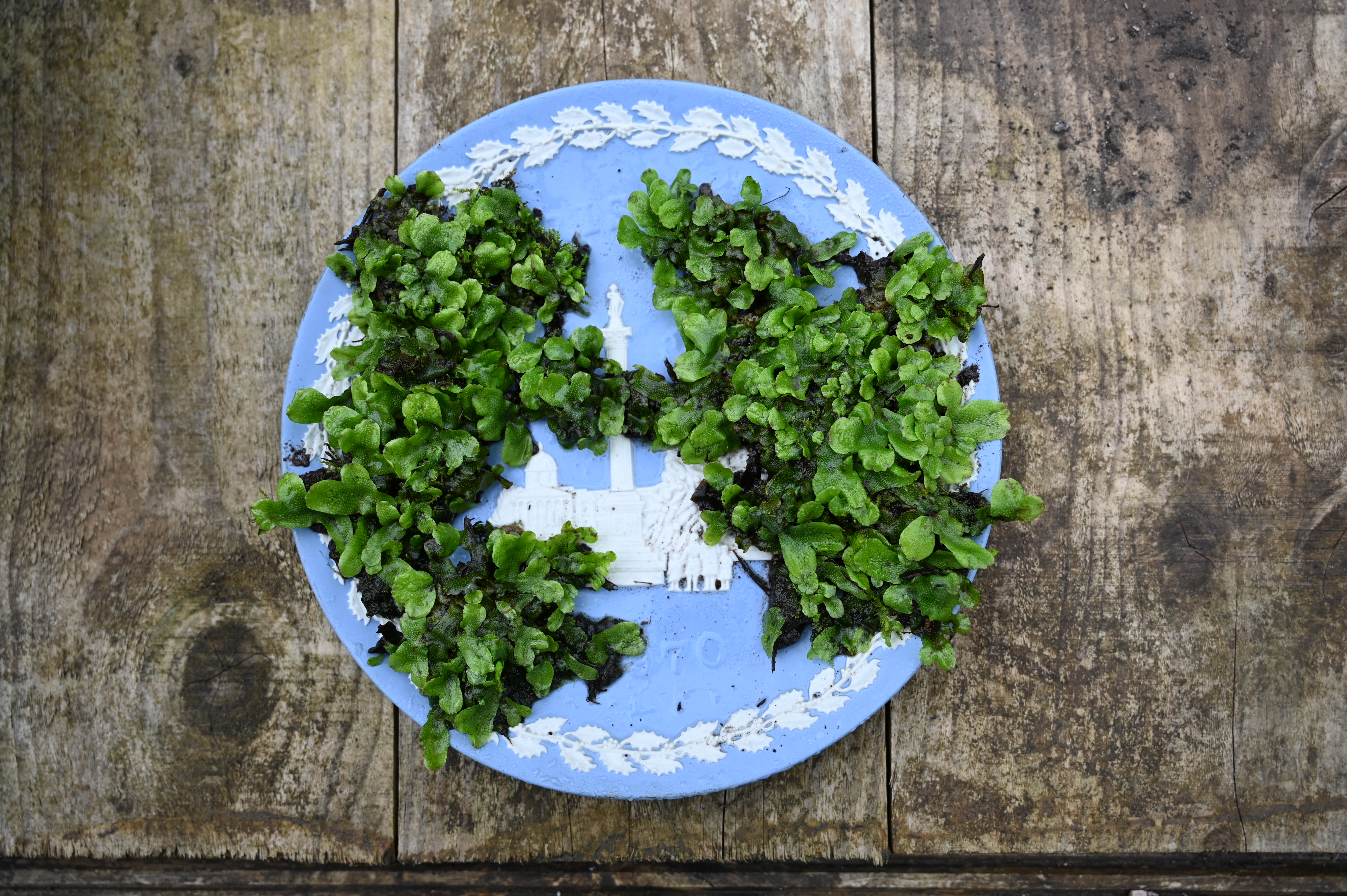

Our Lady liverwort on Nelsons column. Lower photo taken about a month after the upper one.


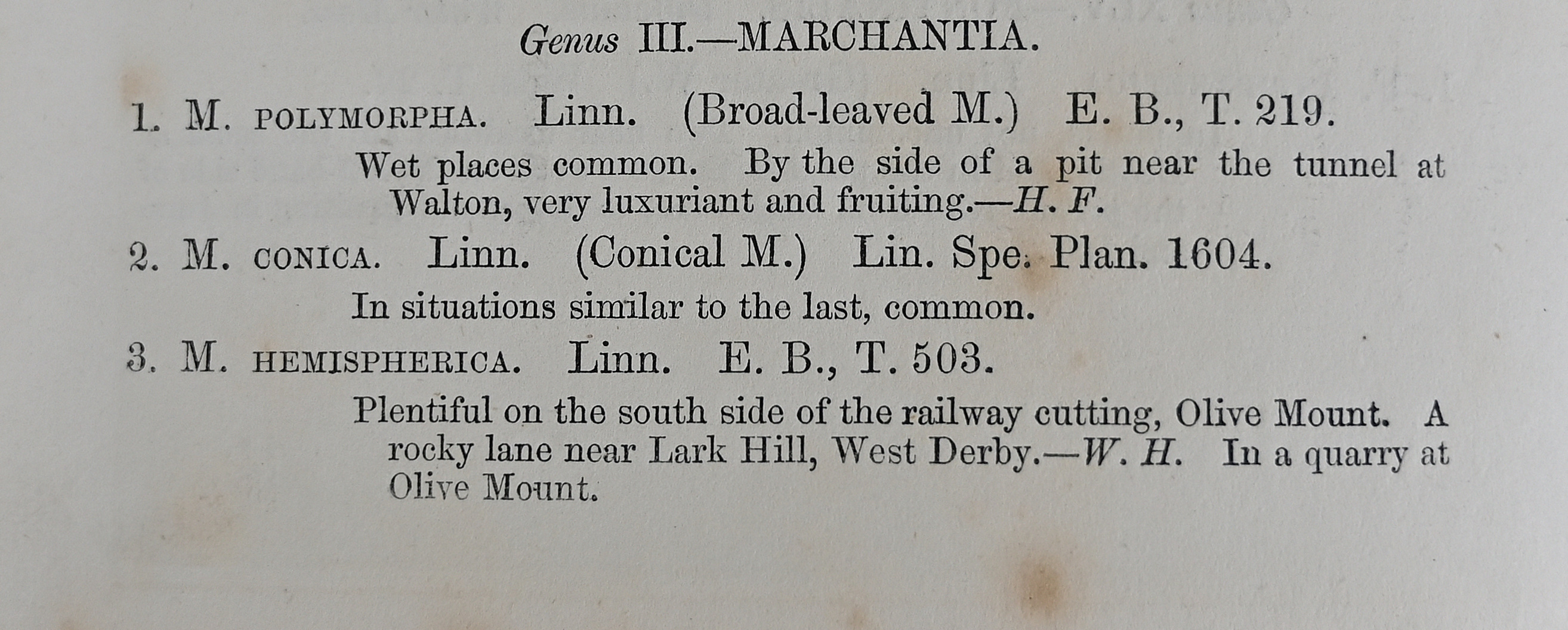
Fred Marrat – a Liverpudlian Victorian botanist 1955; liked to roam around Brotherton and Dibbinsdale looking for mosses and liverworts. He published a book in 1855 called “Musci and Hepatice” of Liverpool and Southport. His only reference to M. conica is to mention that it was found in a similar area to other Marchantia. I like to think that he saw the same liverwort that developed into Our Lady.
 Rod Dillon