
Part of the Liverpool Independents Biennial 2025.
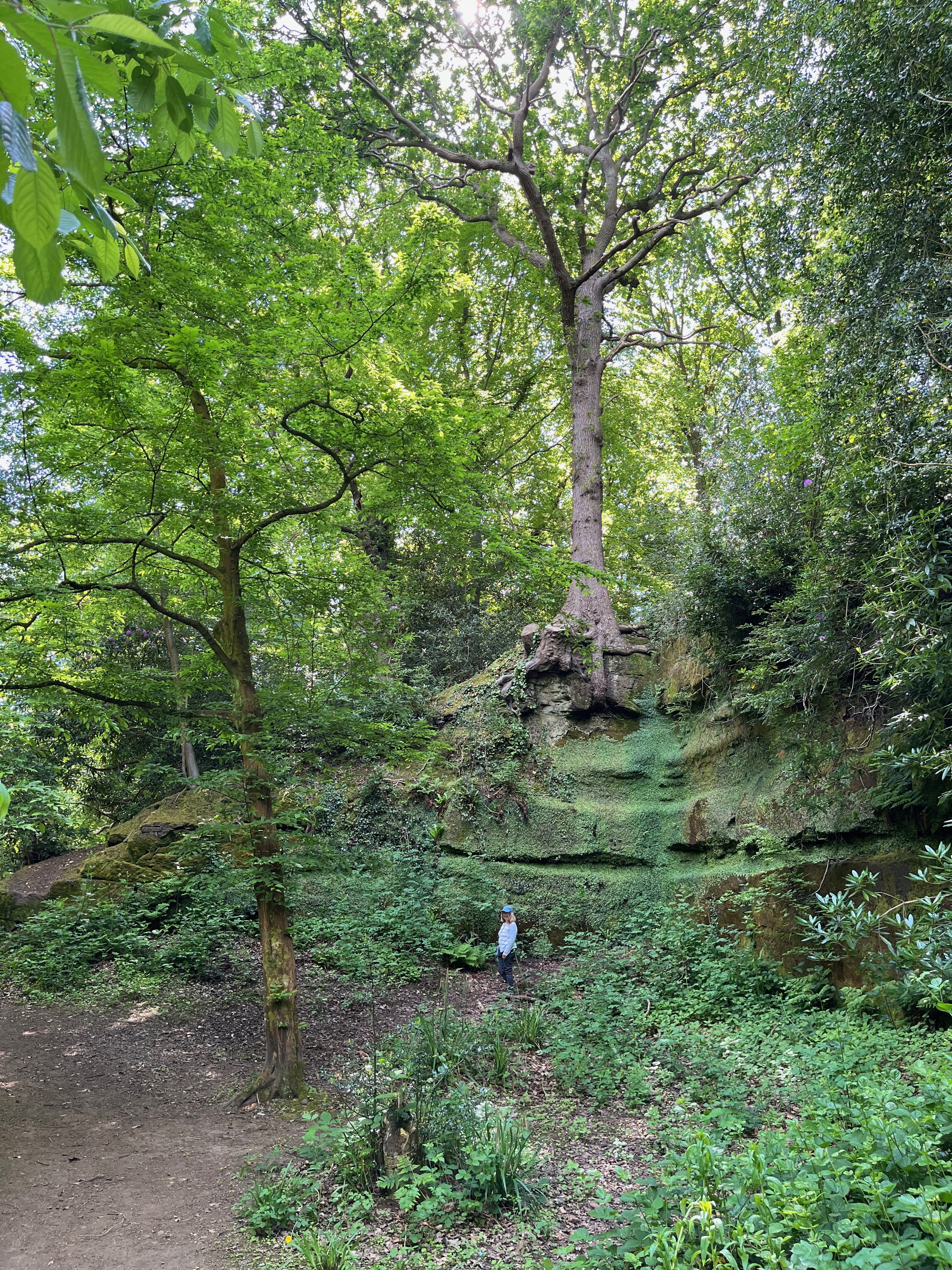
Just a mile away from Liverpool city centre lies the last tract of ancient woodland in Merseyside: Dibbinsdale and Brotherton Park nature reserve, Wirral, UK.
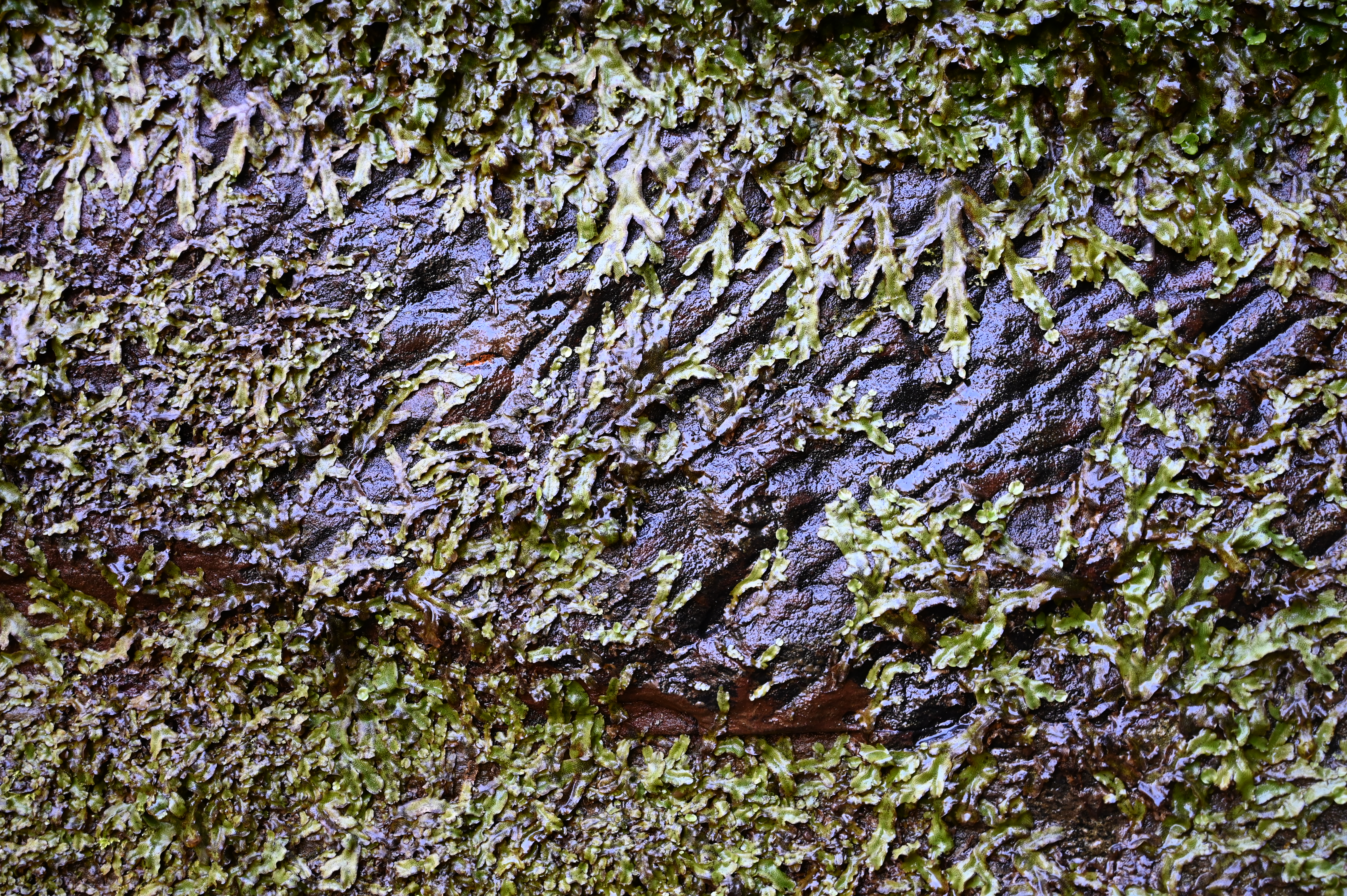
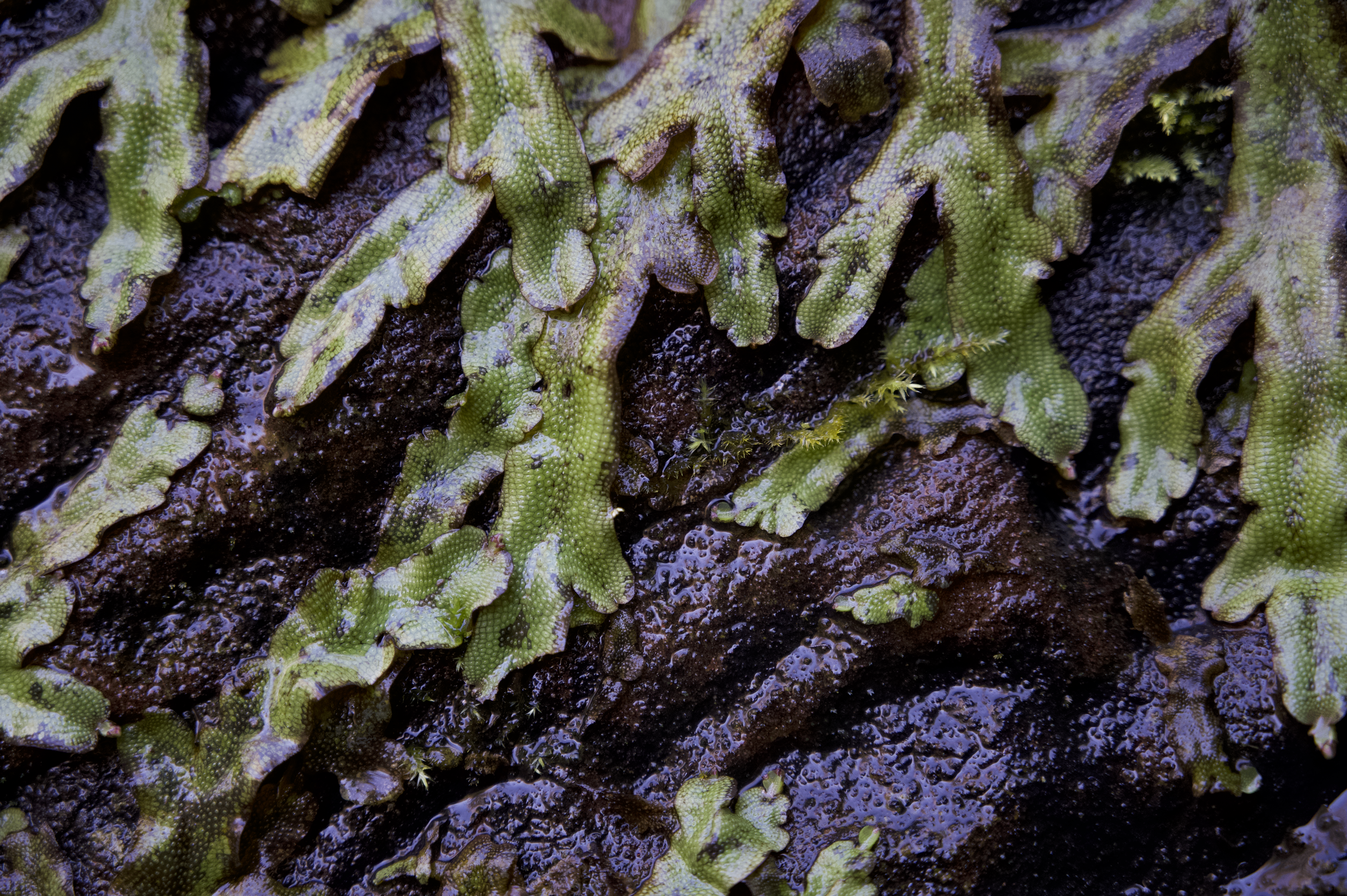
Walking past St Patricks Well there is a large sandstone cliff face with an oak tree growing precariously along the top edge. An old sandstone quarry. The stone hacked and carved from the site is long gone to become part of the human landscape of Liverpool. The cuts into the sandstone bedrock over a hundred years ago have been covered by a wondrous flowing sheen of Snakeskin Liverwort stretching across and up the cliff face. This liverwort is the female form and I named the magnificent plant Our Lady Liverwort.
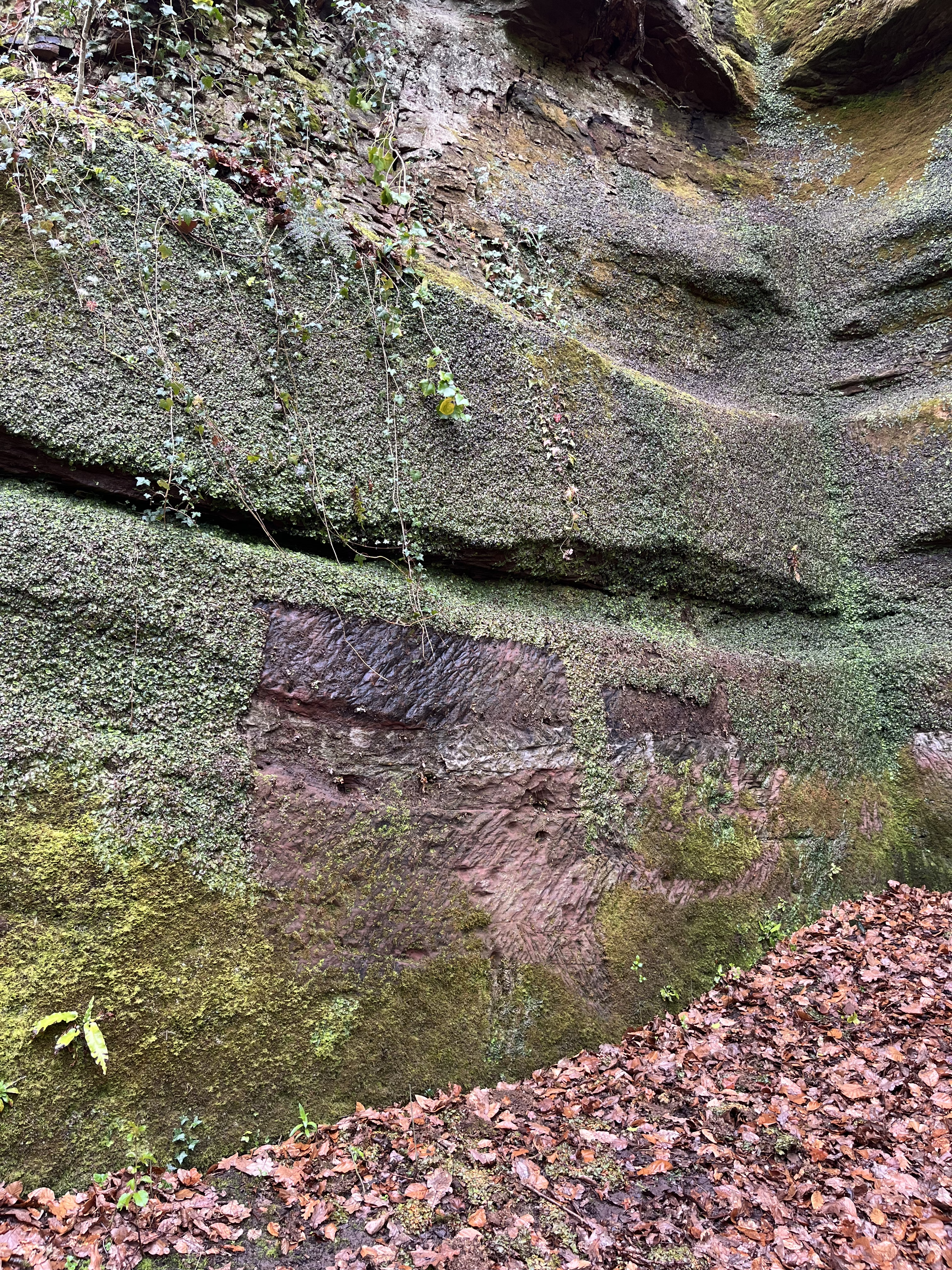
Two years ago I revisited the Liverwort covered quarry walls and something had changed; orange and yellow penis shaped tags had been sprayed across Our Lady Liverwort. An unknown unawareness of a violation, sprayed on her, the regal Liverwort. Two days later, Ste -The-Ranger cut out two large squares of Our Lady containing the penis tags. I collected the discarded, paint covered parts of Our Lady and took them home. Our Lady started to grow and shed the paint and I was able to take some of Her back to restore the quarry face.
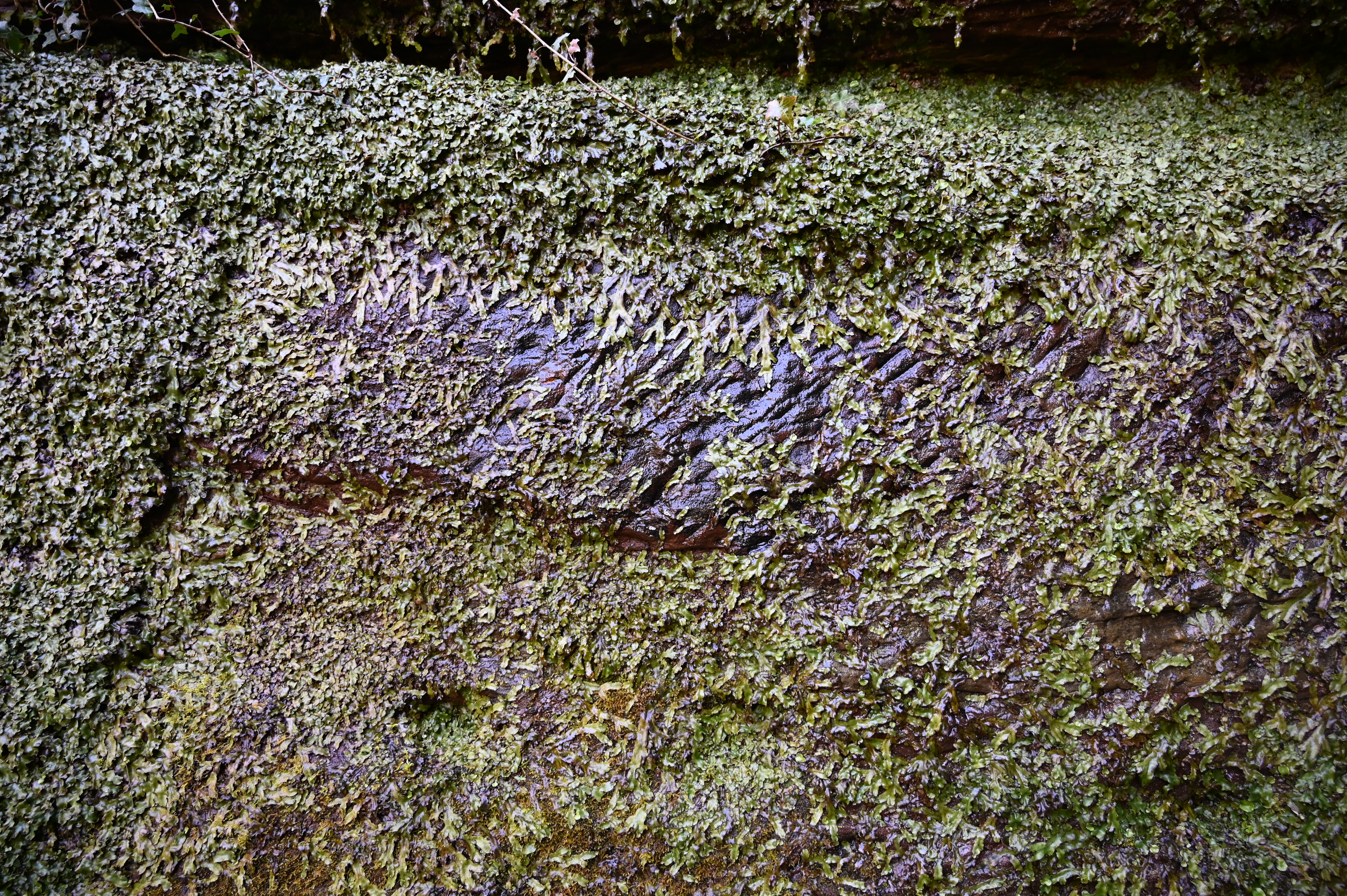
My art practice focuses on more than human storytelling, the politics of care and concern for the liveliness of living ecosystems. I try and see the world through non-human perspectives. I have spent over 40 years researching social and mutualistic encounters between species, particularly between species invisible to the naked eye.
We don’t see plants……
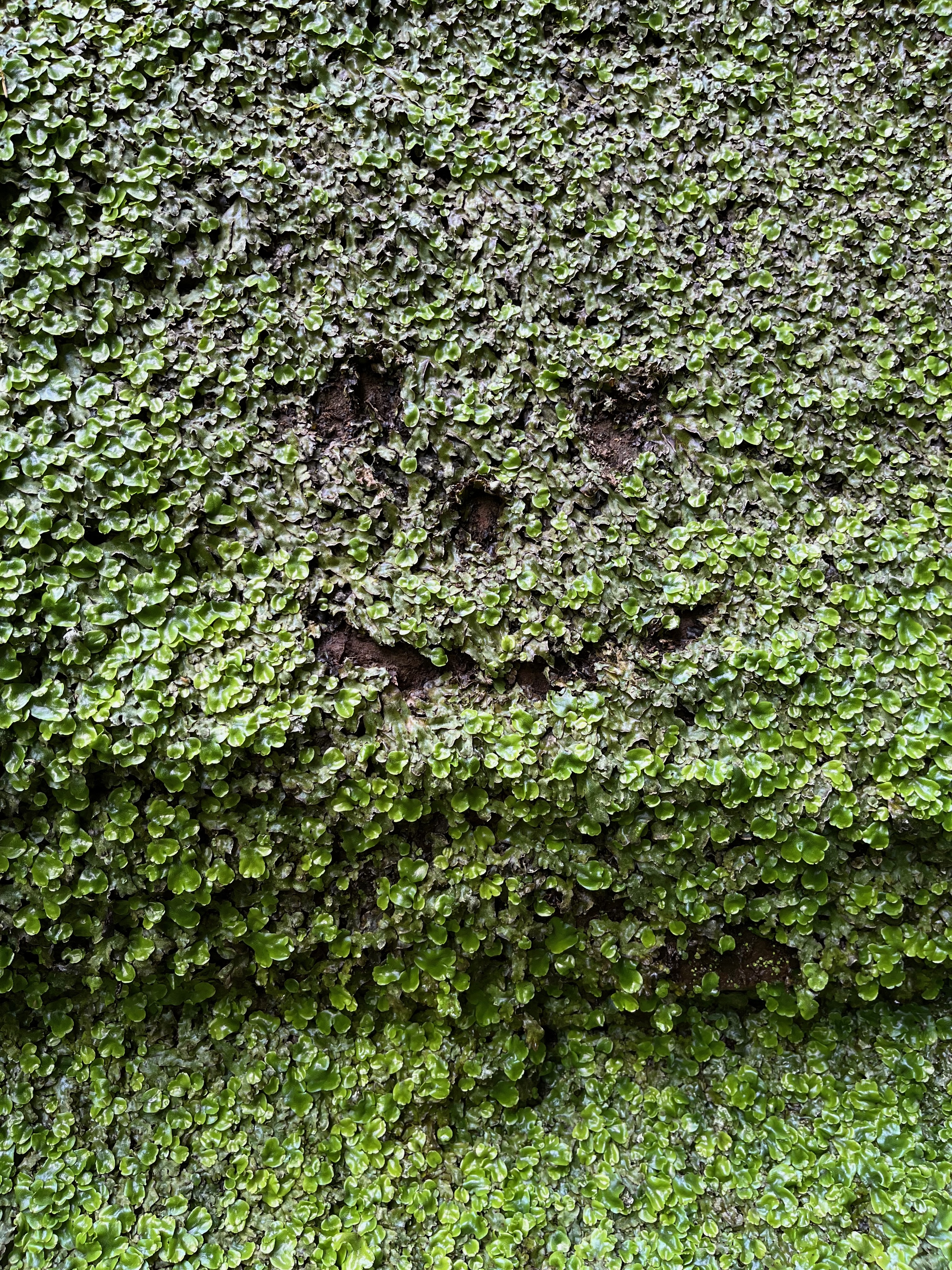
This project also addresses “Plant Blindness” – the loss of our ability to “see” and respect the plant world around us. Botanists James Wandersee and Elisabeth Schussler developed this term “ as the lack of ability to see or notice the plants in one’s own environment.” If we go for a walk in the woods or a local park what do you look for and remember seeing? Chances are that it will be a bird or mammal. Smaller chance that you might notice a large oak tree. Very unlikely to notice a moss or liverwort. Even artists have a tendency to celebrate animals in their paintings and sculpture. One suggestion for our lack of interest in plants is because they don’t have a face. Thats why plants pots with faces are so popular.
Ironically the week after I wrote these sentences, a face appeared scratched in Our Lady Liverwort; proves my point in an unfortunate way (I’m becoming quite attached to Our Lady after 2 years ofclose attention).
Most of us don’t look for edible plants to eat anymore. Why does this matter? Most of us are failing to notice changes to our landscape; trees such as ash are dying in our neighbourhoods. Many plants are heading towards extinction. Plants are the mainstay of our medicines, prevent soil erosion and flooding and of course produce the oxygen for us to breathe.
INFO and where to meet Her.
The nature reserve site is openly accessible by public transport. Nearest Merseyrail stations are Spital and Bromborough Rake. Or a 1 mile cyclepath walk from Port Sunlight station. There is a bus stop with multiple services next to entrance to Brotherton Park . The site is accessible by wheelchair with care, the path slopes down from the car park. The cliff face is 200 metres away from a Well said to have been blessed by St Patrick in 432 CE but this is probably wishful thinking. The Well has its own Liverwort. Dibbinsdale is a 150 acre area of ancient woodland, marsh and natural meadows; a hidden gem.
I am @sandflyman – Dibbinsdale Volunteer and Friend of Dibbinsdale
Brotherton Park and Dibbinsdale is maintained by Ste-The-Ranger and his cohort of volunteers with support of the Friends of Dibbinsdale. If you want to be a Friend then you would be most welcome
With Thanks to:
Our Lady Liverwort, Liverpool independents biennial, Wirral borough council, Viv Dillon, Carl Davies, Ste Smith, Ali Harwood, Emma Dromgoole. The Volunteers and the Friends of Dibbinsdale, including Liz Hogan, Eleri Cleaver, Colin Armstrong-Liles, Linda McGuire and Tracey Moore.
 Rod Dillon