All images copyright Erika Stevenson.
Rod Dillon and Jen Southern November 2019 – April 2020
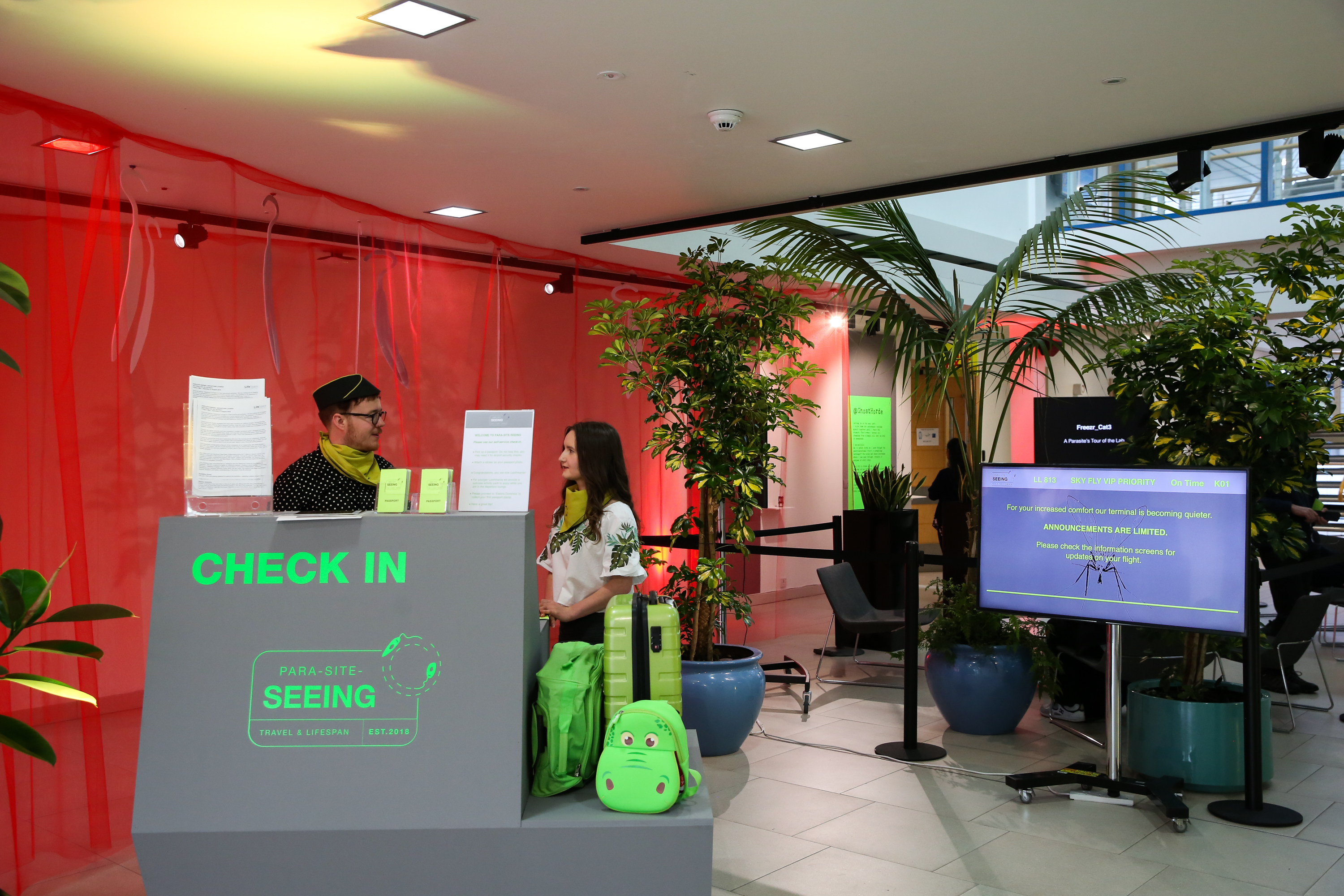
Para-site-seeing: Departure Lounge was a science-art installation imagining an airport lounge for Leishmania waiting to board a sandfly. We invited folks to imagine life from the perspective of a parasite in a human-centred world. This installation was held in the LifeSpace gallery in University of Dundee, funded by the Wellcome Trust. The exhibition was devised by myself and Dr Jen Southern in dialogue with LifeSpace curator and project manager Holly Knox Yeoman and WCAIR Public engagement manager Ali Floyd.
Leishmaniasis is a tropical disease that infects humans and other mammals, the Leishmania parasite has been spread by tiny bloodsucking sand flies for millions of years. Throughout human history they have exploited conflict and competition to move between continents.
Through the digital artworks and this installation, we attempted to imagine the world from the parasites point of view. We created parasites and sand flies with social media-handles that blog, tweet, and vlog their way around the world. In this exhibition, you can become a Leishmania and trace their lives in the wild and as experimental subjects in labs. Imagine an airport for Leishmania, waiting for the next sand fly flight. Waiting in the lounge you catch some TV showing Leishmania lives in research labs.
All images copyright Erika Stevenson.


In your trip around the show you experienced life down the microscope as Leishmania. Discovered your time with the dinosaurs, crossed oceans with conquistadors and travelled by train in India. You could even take a selfie inside a sand fly as you stamped your Para-site-seeing passport.
The Departure Lounge gave a flavour of the complexity of our relationship with these parasites and their own history. We are a multi-species world living in critical times. When the humans are failing to notice the extinction epidemic, is there value in the non-human perspective – even from a deadly parasite?
The exhibition was an expansion of Rod Dillon and Jen Southern’s travel blog artwork PARA-SITE-SEEING.org. It was co-commissioned by NEoN Festival and the Wellcome Centre for Anti-Infectives Research, or WCAIR. WCAIR is creating a world-leading hub for drug discovery to tackle neglected tropical diseases that affect some of the world’s poorest people.
Exhibition Zones
Check In at the desk, Pick up a passport page.
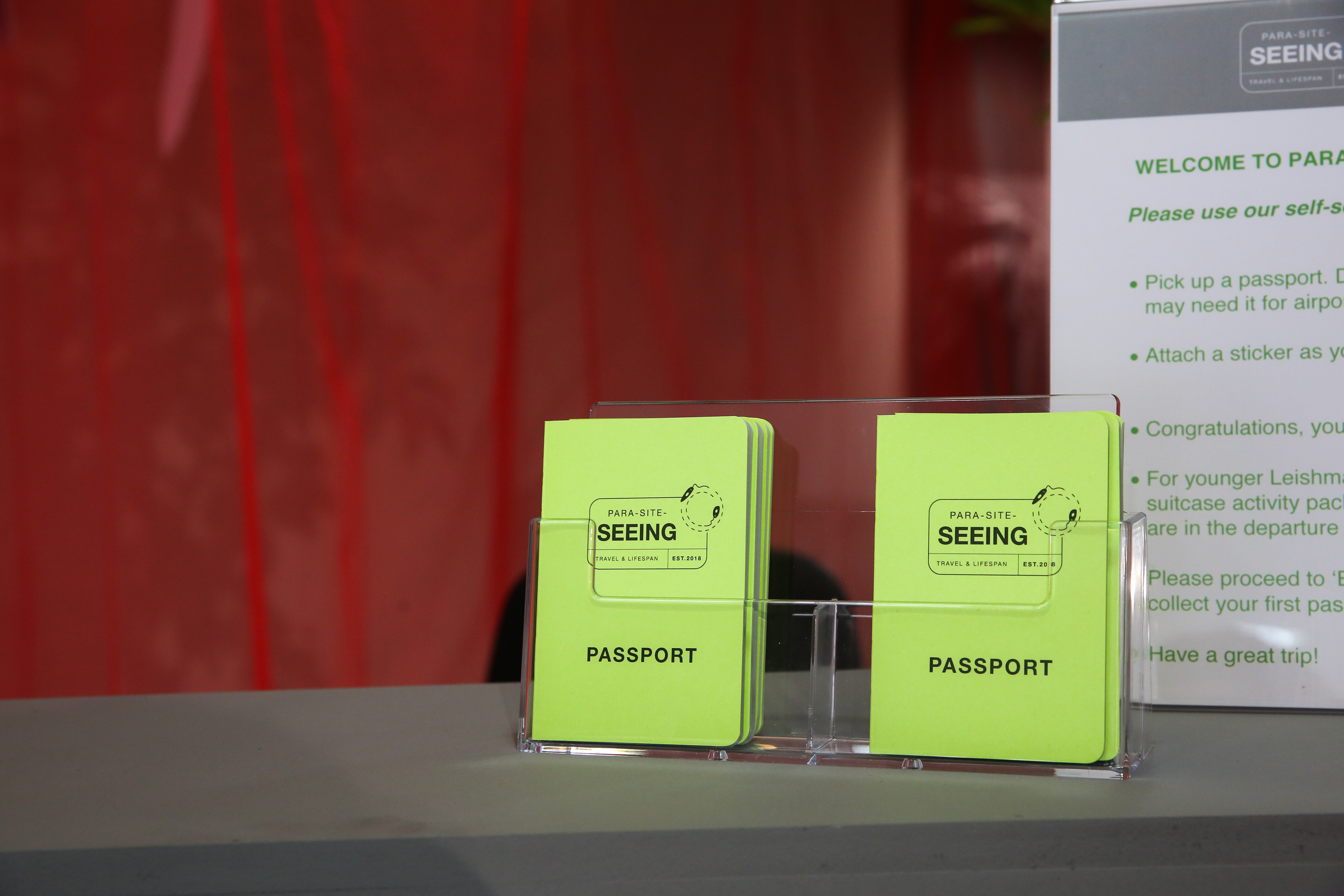
Use your Para-site-seeing passport to explore the exhibition, stamping your passport at each section.
LdBOB
LdBOB is a Leishmania parasite with a Twitter presence. Imagine what you might say to a deadly parasite!? We would like to know what you would like to say to LdBOB. Tweet @ldbob72 or write a response on one of the speech bubbles and add it to the board. These might even begin to appear in LdBOB’s Twitter feed.
You can also look up at the overhead projection presenting the Leishmania Family Travels and its impact on different parts of the world.
Departure Lounge Waiting Area
Freezr_cat3
Get a parasites eye view inside the research labs in this building. Emerge from the storage freezer to take rides on and through a series of experimental equipment. We study Leishmania in highly secure Category 3 labs. For safety, this video was filmed in the main labs using similar processes.
Sand_flyer
This parasite-eye view is of Dr. Rod Dillon’s sand fly research in Lancaster. Get up close and personal as you look back at them inspecting you down the microscope.
Unleished
Pick up your Unleished newspaper, which charts the history of Leishmania’s travel around the world!
We’ve been inspired by Dundee’s DC Thompson’s two intrepid ladies – Marie Imandt and Bessie Maxwell. They were newspaper correspondents who embarked on an epic journey around the world in the 1890s. Their assignment lasted almost a year, during which time they reported on the 10 countries they visited. They sent back pioneering illustrated insights into other cultures.
Through the Gate into the sand fly
@Ghost_Horde
At Dundee University WCAIR labs are developing new medicines to cure Leishmaniasis in humans. Ghost_Horde is the persona of the drug – this assassin story is like an airport novel as it tracks down its targets.
A selection of some of the images captured around the exhibit:
All images copyright Erika Stevenson.


Elektra_Dominica
Amber is fossilised tree resin that is millions of years old, dating from the time of the dinosaurs. Insects such as sand flies were sometimes caught in the resin and preserved. The old Latin name for amber is Electrum, and the Dominican Republic is one of the places where sand flies have been found in Amber.


Leishmania.we
Get comfy in the red gut of the blood-feeding sand fly, which takes the form of an adapted mosquito net. This is where Leishmania multiply, dividing to produce clones of the original parasite.
This story started life on Instagram. Initially, it was a series of family snapshots of Leishmania in the wild, as they travel from the blood stream of a human into the body of a sand fly. We hope you enjoy its new physical form.
Don’t forget to grab an LdBOB parasite prop and take a Cellfie!
 Rod Dillon